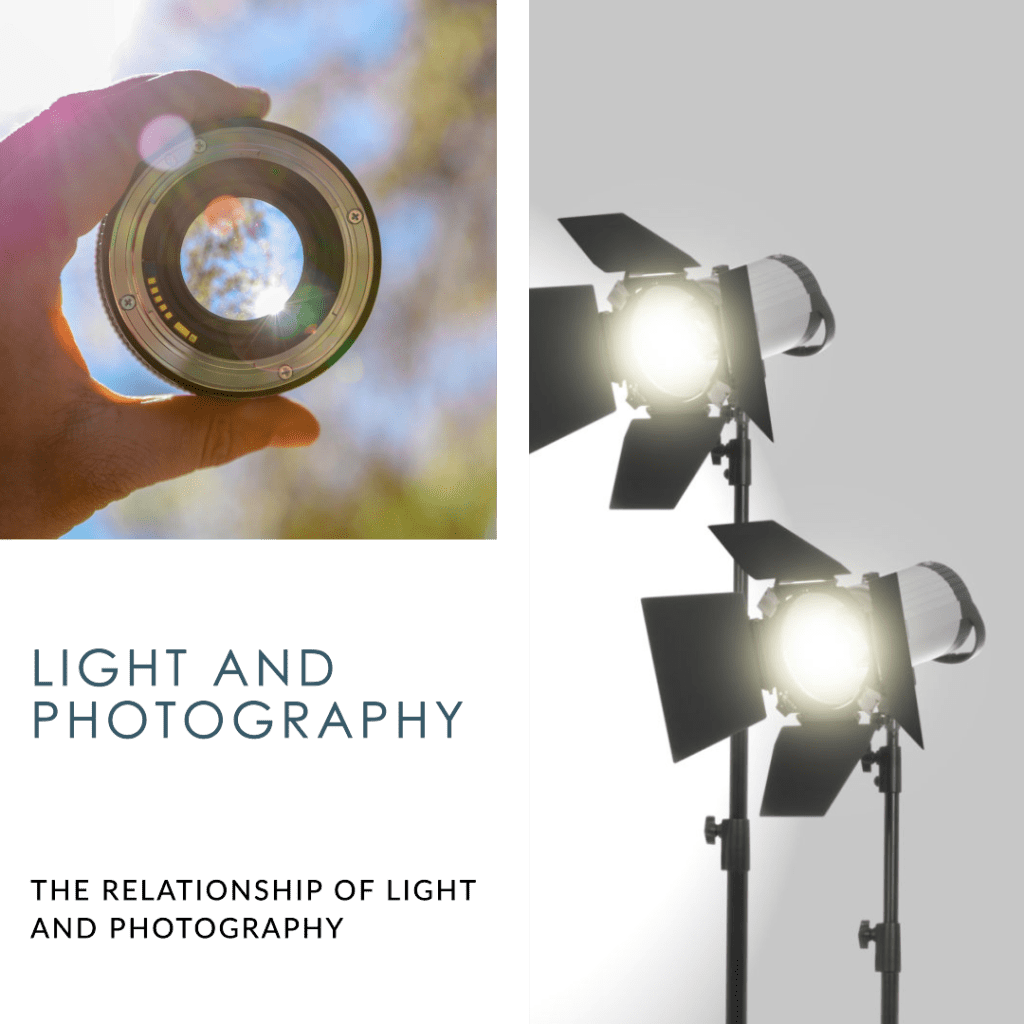
Photography and Energy Manipulation
Controversial start, but here we go… when you really think about it, are photographers just visual artists? It’s not like we’re painting or sculpting with traditional materials. I’d argue it’s more about how we play with energy, kind of like how musicians play with sound waves. We’re playing with a different type of energy: light!
Photography begins when light shows up, and it only kicks off when that light bounces off something – it could be a flower, a magazine, or even your TV screen – and then hits your eyes. At every step, photographers are messing around with light – adjusting it, capturing it, or showcasing it to people. Interestingly, photography only exists because of the interplay between light and matter.
At the end of the day, photography is all about having fun with light, whether you’re going for artsy vibes or tech-savvy shots. Light is the photographer’s playground equipment – we use it, catch it, and bend it around to make some (hopefully) awesome pictures.
The Nature of Light
So, have you ever truly appreciated the significance of light in your daily life? Perhaps when one is momentarily blinded by the sun, attention is drawn to its effects. Yet, light is the essential element in all photographs. However, what exactly is light? It permeates our surroundings, and for the most part, we take it for granted during our waking hours. However, its importance cannot be understated, not only in the realm of photography. A comprehensive definition of light is intricate and has been the focal point of multiple Nobel Prize-winning discoveries.
Simply stated, light represents a form of energy known as electromagnetic radiation. It traverses space in minuscule clusters or bundles referred to as photons. A photon is purely energy and possesses no mass when stationary. Its energy gives rise to an electromagnetic field, which remains imperceptible unless it comes into contact with (or reflects off) a material object (such as a face, a flower, or a TV screen). Consequently, light itself eludes the human eye, and its presence is only discernible when it interacts with an object in space.
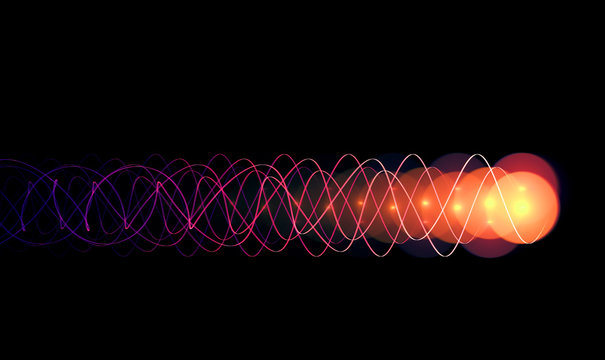
Electromagnetic Radiation is similar to a magnetic field around a magnet—in that’s its invisible and yet we know its there when it attracts metal. However, unlike a magnetic field’s that has a constant strength, the electromagnetic field around a photon fluctuates as it travels. This fluctuation prevents light from attracting metal like magnets do.
Here’s a example to illustrate:
- The magnetic field around a magnet always pulls in metal stuff, like paperclips, no matter how far they are, because the magnetic field is always strong and consistent.
- In contrast, light from a flashlight, which consists of photons, does not attract metal objects. Instead, its electromagnetic field fluctuates, allowing the light to illuminate objects but not pull them closer. This fluctuation is why you can see the light, but it doesn’t behave like a magnet.
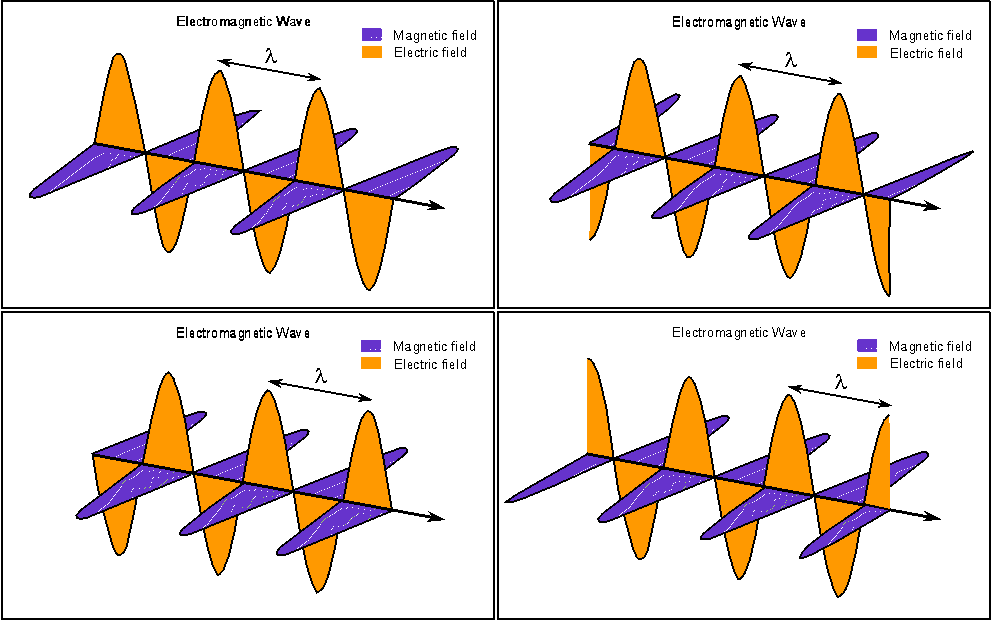
The photon’s electromagnetic field kind of wiggles as it moves around. In the picture above, you can see how the field changes, going from weak to strong and back again. It’s made up of electric and magnetic parts, and they both go from zero to positive to zero to negative. They’re at right angles to each other. Even though all photons move at the same speed, their electromagnetic fields wiggle at different rates depending on their energy levels. And that’s what lets us see different colors. So cool, right?
Light and Colour
The fluctuation rate of an electromagnetic field is known as its frequency, measured in Hertz (Hz) or megahertz (MHz). We as humans perceive this fluctuation as colour.
Red light has less energy and a slower fluctuation rate than blue light.
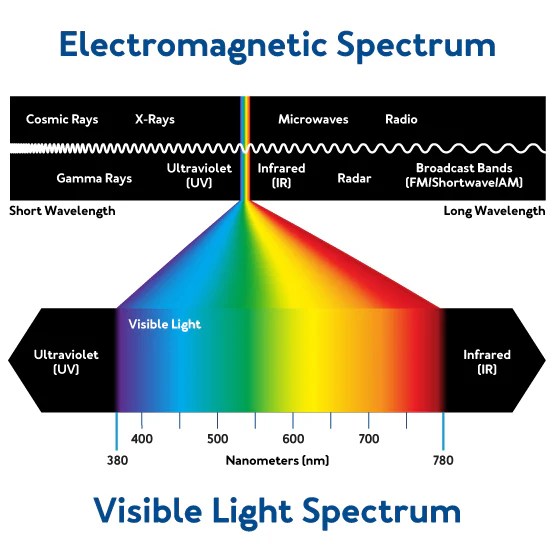
Visible light is only a narrow range of electromagnetic frequencies. If we look at the image above showing the visible light spectrum we can get some idea of how much of the spectrum we can actually see. Modern cameras can detect a wider range of frequencies than the human eye, which is why pictures can be affected by ultraviolet light and X-rays.
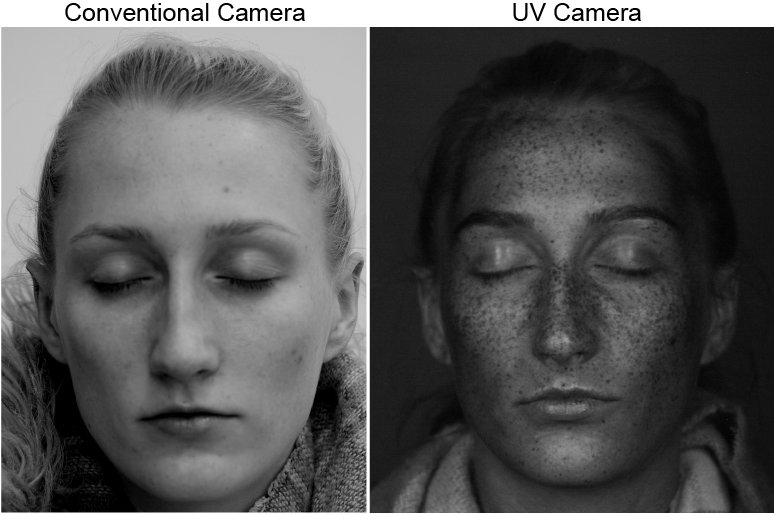
In fact ultraviolet photography can be a facinating realm to explore but that’s for another blog. But just for an example look at the same image captured within the visible light spectrum of the left and that within the ultraviolet range..where did all those freckles come from? They are always there just not visible to the human eye.
Describing Light in Photography
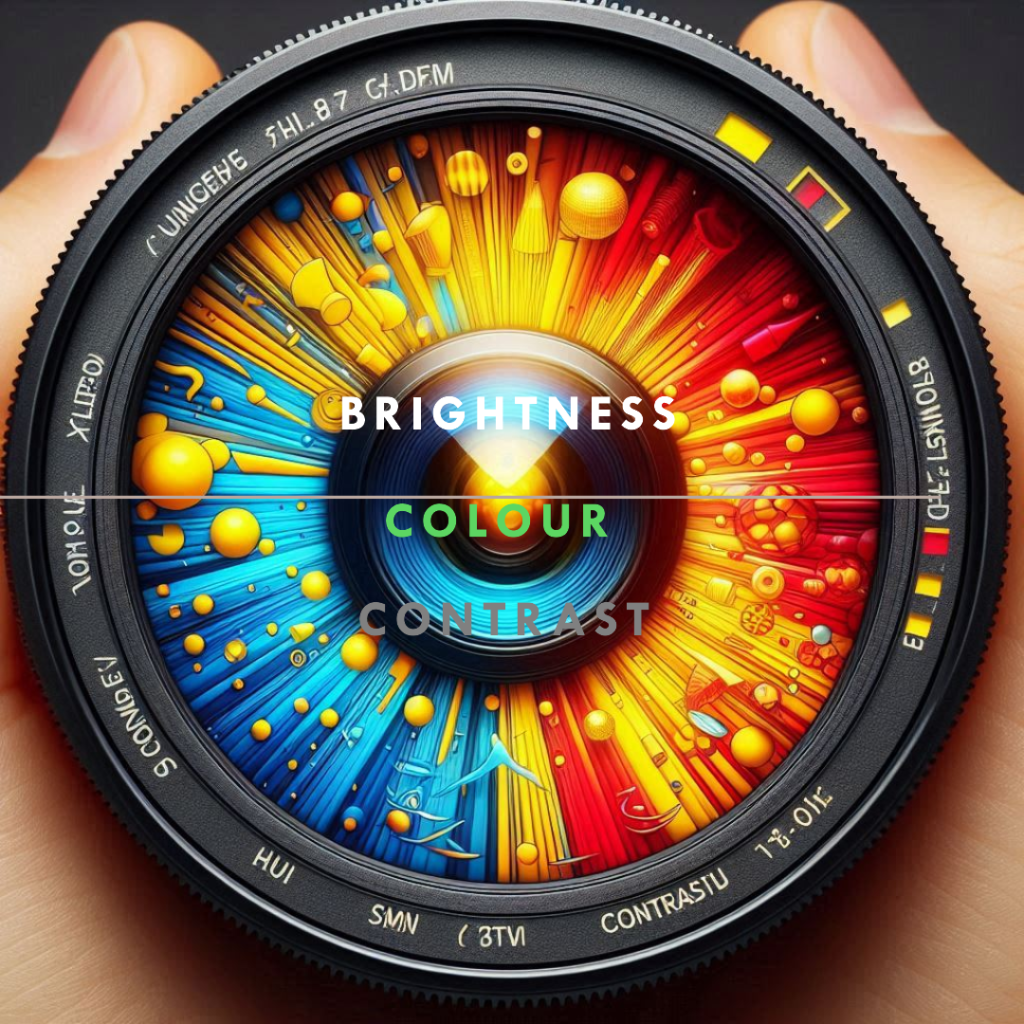
Photographers use precise descriptions of light to manipulate it effectively. Key characteristics include brightness, colour, and contrast, which determine image quality and mood. Brightness affects exposure and detail capture. Color and its temperature influences image warmth or coolness. Contrast impacts tonal range and can be adjusted with various techniques.
Mastering these aspects allows photographers to exercise creative control in both studio and outdoor settings, enabling them to transform ordinary scenes into extraordinary photographs.
Brightness
When it comes to photography, one of the most crucial aspects of a light source that photographers must consider is its brightness. Generally, a brighter light source is almost invariably preferred because it enables photographers to capture images of higher quality. With increased brightness, photographers can utilise smaller apertures, which enhance depth of field and sharpness. Additionally, brighter light allows for the use of faster shutter speeds, which help in freezing motion and reducing blur. Moreover, it enables the use of slower, fine-grained film, which can capture more detail and produce finer images. Thus, the brightness of the light is a key factor in achieving the desired outcomes in photography.
Color
Light, in its various forms, encompasses a broad spectrum of colors, and intense, vivid hues can add significant artistic value to a photograph. Despite this, the majority of photographs are captured using white light. This form of light is essentially a balanced combination of red, blue, and green colors. Photographers use the color temperature scale, which is expressed in degrees Kelvin (K), to categorize the differences in white light. You’ve got the warm tones of candlelight and sunrise at around 2000K, all the way to the cool tones of a deep blue sky at 10000K. These values help photographers tweak their camera settings and lighting to get the perfect color balance in their photos.
Modern digital cameras are equipped with highly adaptable settings that allow photographers to easily adjust for the different temperatures of light they encounter, ensuring optimal color rendering in every shot.
Contrast
Contrast refers to the angle at which light rays hit the subject. High-contrast light sources have rays that strike from nearly identical angles, creating hard shadows with sharp edges. Low-contrast light sources have rays that strike from various angles, producing soft shadows with blurred edges. The size of the light source affects its contrast: smaller sources are hard lights, while larger sources are soft lights. However, special attachments or modifiers can adjust light to achieve the desired effect.
So how do we as photographers play and manipulate light what can be do to help create the images we want? Well there are two aspects, camera controls and external lighting.
Camera Settings and Controls for Managing Brightness, Colour, and Contrast
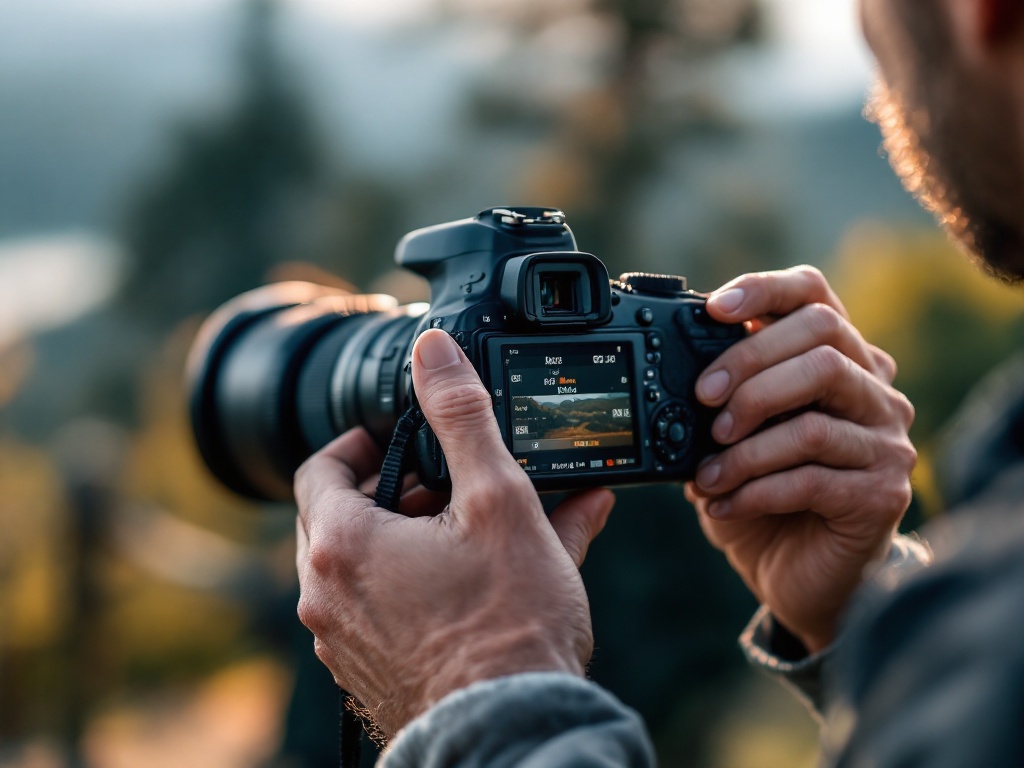
To effectively manage the three fundamental aspects of photography—brightness, colour, and contrast—understanding and utilising your camera’s settings and controls is essential.
Brightness Control
- Aperture: The aperture setting controls the amount of light entering the camera. A wider aperture (lower f-number) allows more light, which is beneficial in low-light situations to achieve brighter images.
- Shutter Speed: Adjusting the shutter speed affects how long the camera’s sensor is exposed to light. Faster shutter speeds can help freeze motion, while slower speeds can increase brightness by allowing more light in.
- ISO Sensitivity: ISO controls the camera sensor’s sensitivity to light. Higher ISO settings can brighten images in darker environments but may introduce noise. Balancing ISO with aperture and shutter speed is crucial for optimal brightness.
Color Management
- White Balance: This setting adjusts the color temperature of your photos. Selecting the appropriate white balance can ensure accurate color representation under various lighting conditions, such as daylight, tungsten, or fluorescent light.
- Picture Styles or Profiles: Many cameras offer picture styles or profiles that can be adjusted to enhance color saturation and contrast. Experimenting with different profiles allows for creative control over the mood and tone of your images.
Contrast Adjustment
- Exposure Compensation: This feature allows you to adjust the brightness of your images on the fly. Increasing exposure compensation can reduce contrast by brightening shadows, while decreasing it can enhance contrast by darkening highlights.
- High Dynamic Range (HDR): HDR mode captures multiple exposures of the same scene and combines them to produce a single image with a greater dynamic range. This technique helps balance high-contrast scenes, preserving details in both shadows and highlights.
- Post-Processing: While not a camera setting per se, post-processing software like Adobe Lightroom or Photoshop provides extensive tools for fine-tuning brightness, color, and contrast. Making adjustments during editing allows for precise control over the final image.
Mastering these camera settings and controls will empower photographers to create visually stunning images by effectively managing brightness, color, and contrast. The second aspect is the use of external lighting.
Utilising External Lighting for Creative Photography
External lighting is a powerful tool that photographers can use to enhance their creative vision and produce images with unique qualities. By manipulating external light sources, photographers can control the mood, atmosphere, and overall aesthetic of their photographs.
Types of External Lighting
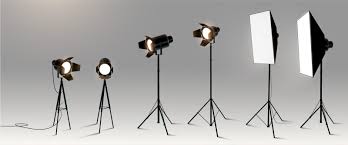
Studio Lighting: This includes strobes and continuous lights used in studio settings. Studio lighting offers precise control over the intensity, direction, and color of light, allowing photographers to create intricate light setups for portrait, product, and fashion photography.
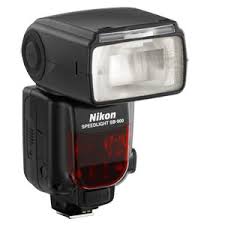
Speedlight/Portable Flashes: Also known as speedlights, these compact flashes are ideal for on-the-go photography. They provide additional light in low-light situations and can be used creatively to add dramatic effects, such as backlighting or fill lighting.
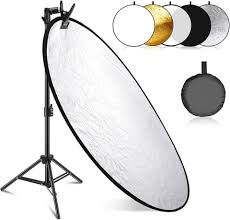
Natural Light Modifiers: Reflectors, diffusers, and scrims are used to modify natural light. Reflectors bounce light onto the subject to fill shadows, while diffusers soften harsh light. These tools are versatile for outdoor and portrait photography.
Examples of Creative Use of External Lighting
- Portrait Photography: Using a softbox or umbrella in a studio setting can create soft, flattering light on the subject’s face, enhancing features while minimizing harsh shadows. Adding a hair light or rim light can separate the subject from the background.
- Product Photography: External lights can be positioned strategically to highlight specific product features. For instance, using a spotlight to create a focused beam of light on a product can add drama and emphasize textures.
- Night Photography: Portable flashes or LED lights can illuminate subjects in low-light environments, such as urban scenes or landscapes. This technique allows for creative light painting, where long exposures capture trails of light.
By experimenting with different external lighting setups, photographers can unlock new creative possibilities, transforming ordinary scenes into extraordinary images. Mastery of external lighting techniques empowers photographers to shape light according to their artistic vision.
Light is a cornerstone of photography, acting as the energy that allows images to form through interactions with objects. Above we have explored the complex relationship between light and photography, emphasising how photographers manipulate light’s characteristics—brightness, colour temperature, and contrast—to enhance image quality and mood. It discusses the importance of understanding light’s electromagnetic nature, which is invisible until it interacts with an object, and how this knowledge empowers photographers to creatively control their work.
We also delved into camera settings and controls for managing brightness, colour, and contrast, as well as the use of external lighting techniques.
By mastering these elements, photographers can transform ordinary scenes into extraordinary images, shaping light according to their artistic vision.



 Kemple Photography Blog
Leave a Reply